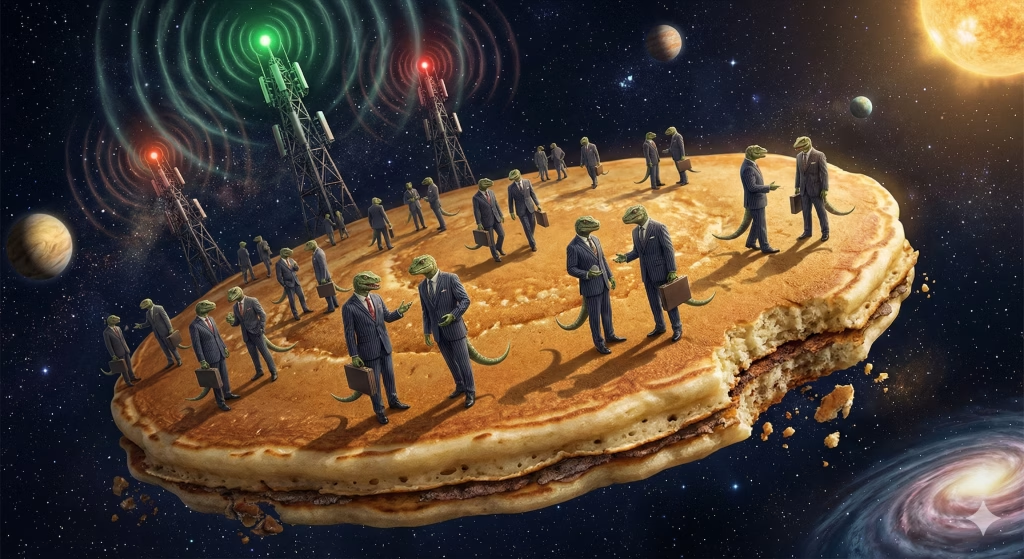
We live in a strange world. While scientists are developing quantum computers and vaccines at record speeds, a significant portion of the population is convinced that the Earth is flat or that the global elite consists of blood-drinking reptilians.
It is easy to laugh at these theories and label believers as “tinfoil hats.” However, a new extensive research report, Epistemology of Shadows, suggests that this is not about stupidity. Conspiracy theories are “street philosophy”—a way to structure a chaotic world.
Your Brain is a Conspiracy Theorist
The human mind evolved for survival, not for truth-seeking. Our brains are efficient “pattern recognition machines.” On the prehistoric savanna, it was safer to mistake the wind rustling in the grass for a tiger and flee, than to mistake a tiger for the wind and be eaten.
This same mechanism is in overdrive today. When something random and frightening happens—like a pandemic or a stock market crash—our brains (specifically the fast, intuitive “System 1”) reject the idea of coincidence. We have an innate need to find a culprit.
One of our strongest biases is the proportionality bias: We struggle to accept that a massive event can have a small, banal cause. That is why the idea of a single, marginalized man assassinating JFK feels wrong. A great tragedy demands a great cause—a massive conspiracy.
Managing Chaos and the Allure of Being “Awake”
Conspiracy theories offer something that cold science does not: comfort.
The world is a terrifyingly random place. The idea that a secret, evil elite controls everything is, paradoxically, safer than the idea that no one is in control. If the enemy is named (whether it’s Bill Gates or 5G towers), it can be fought against.
Furthermore, conspiracy theories stroke the ego. By believing in something the “masses” do not understand, an individual feels unique. They are not a sheep; they are “awake.” This sense of community and possessing superior knowledge is highly addictive.
Old Wine in New Bottles: QAnon is Medieval Folklore
One of the research’s most startling findings is the historical continuity of these stories. Technology changes, but the plot remains the same.
Take the QAnon movement, for example, which claims elites kidnap children to use their blood for rejuvenation. This is an almost identical copy of the medieval Blood Libel, where Jews were accused of the same act. Before, they spoke of ritual blood; now, it is “adrenochrome.” Before, the villains were “witches” or minorities; now, they are the “global elite” or “reptilians.”
It is modern folklore. It recycles ancient myths about the battle between good and evil but updates them for the digital age.
Algorithms and the End of Trust
Why are these theories spreading explosively now? The reason is in your pocket. Social media algorithms are programmed to maximize engagement, and nothing engages humans more effectively than fear and outrage.
Researchers speak of a “polarization loop.” When you click on one conspiracy video, the algorithm offers the next, slightly more radical one. Soon, the user is in an echo chamber where all opposing information has been preemptively labeled as lies. In such a state, fact-checking does not work because it is perceived as an attack on one’s identity.
Can the Bubble Be Burst?
It is crucial to remember that conspiracy theories do not emerge in a vacuum. History is full of real conspiracies (like Watergate or the tobacco industry’s lies) that have eroded trust in institutions.
Defeating conspiracy theories cannot be achieved with facts alone, but by rebuilding trust. As long as the world feels unfair, chaotic, and frightening, the “knowledge of the shadows” will continue to offer an enticing escape.