Helsinki’s goal of achieving carbon neutrality by 2030 is ambitious, but the means to achieve it are surprisingly mundane. Over the years, envisioned futuristic transport solutions—from cable cars to flying taxis—have one by one collided with practical realities. What remains is what works: “boring” but efficient rail transport and the electrification of buses.
A recent analysis of the future of Helsinki’s public transport paints a picture of a city where sci-fi dreams have given way to engineering logic. While visions are inspiring, climate change will not wait for a technological revolution.
When Visions Meet the Finnish Winter
Not long ago, autonomous robot buses and Personal Rapid Transit (PRT) systems appeared to be the holy grails of urban transport. The reality, however, has proven more complex. Helsinki’s profile as a “Smart City” testbed has produced valuable data, but also harsh disappointments.
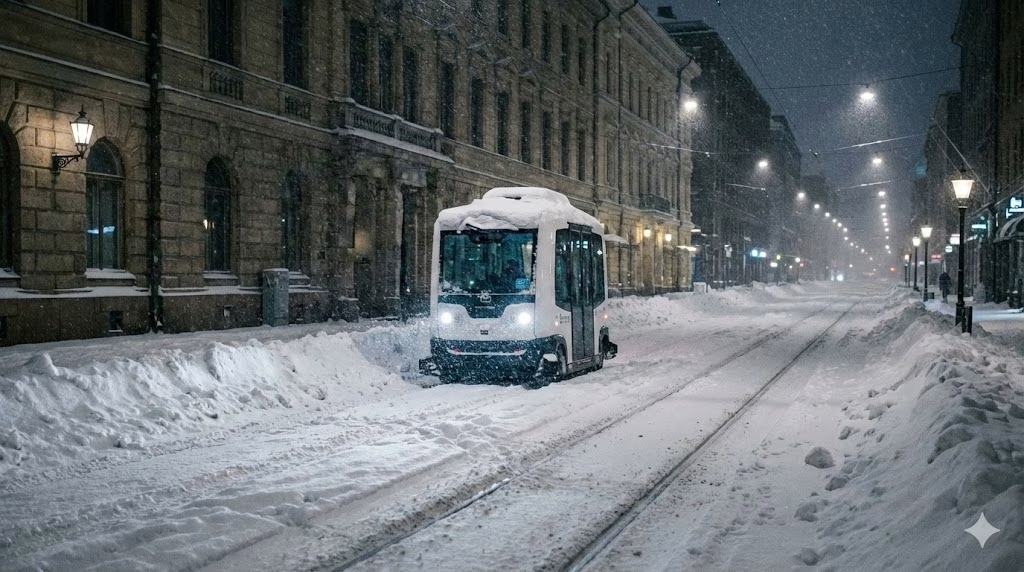
The robot bus’s greatest enemy is not the technology itself, but the northern climate. The LiDAR sensors acting as the devices’ “eyes” interpret snowfall and swirling snow as obstacles, causing the buses to make emergency stops on empty roads. As long as the robot car is only a “summer child,” it cannot replace traditional, year-round public transport.
A similar fate befell the proposed cable car between Laajasalo and the city center. Theoretically futuristic and affordable, the gondola lift eventually lost out to the good old tramway. The reasons were prosaic: Helsinki’s windy weather would have caused too many service interruptions, and the tram’s capacity is simply superior during rush hours. The Crown Bridges project is being realized with rails, not cables.
The Renaissance of Rail Is Efficient, Not Sexy
The solution selected as the backbone of Helsinki’s traffic was invented back in the 19th century: a steel wheel on a steel rail. According to the analysis, the future “rail city” will be built upon the Raide-Jokeri light rail, the Vantaa tramway, and the upcoming Viikki-Malmi light rail line.
This is a strategic choice. Rail transport is the pinnacle of energy efficiency, and it guides urban structure to become denser in a way that buses cannot. But even the metro has not been spared from realities. Dreams of full metro automation (driverless operation) have stalled due to technical and financial challenges, and the current focus is on basic renovations rather than innovation.
True Intelligence Lives in the Phone, Not in the Sky
Although flying taxis (eVTOL) and Hyperloop tubes remain in the headlines, their role in Helsinki in 2030 will be marginal—if even that. The analysis summarizes it aptly: true “Smart City” intelligence is not found in flying cars, but in a mobile app that can combine the metro, a city bike, and an autonomous ferry into one seamless travel chain.
Development is therefore boring, but it is the only way to achieve emission targets. Electric buses, which are already commonplace, and expanding rails produce the lion’s share of the necessary emission reductions.
Perhaps it is time for us to accept that a functional city does not look like Blade Runner. It looks like a light rail tram that runs on time—rain or shine. And that is precisely where its radicalism lies.