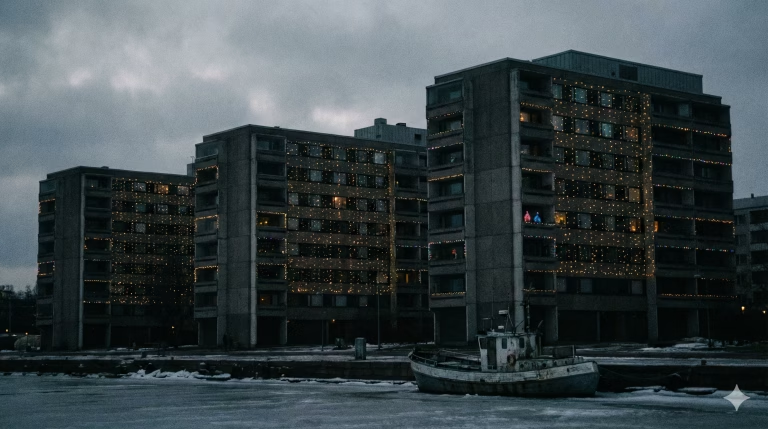

Finland has once again been named the happiest country on Earth. Wonderful news, of course — but it does raise one essential question: has anyone actually been here in November?
Or February?
Or really any month when the rain falls sideways and the bus is cancelled due to a “driver shortage”?
According to studies, Finns are happy because society is equal and corruption-free, and people trust one another. Sounds beautiful, almost poetic — like a mindfulness exercise sponsored by the government.
In everyday life, this is visible in the way anyone can ask a neighbour for help — as long as the request is submitted in writing, three days in advance, with a solemn promise never to disturb again.
Trust in others is indeed strong. Especially when you leave your phone on a café table while going to the bathroom: anyone can trust it will still be there upon your return. And of course it is — though someone at the next table has already silently judged your recklessness, consulted the collective wisdom in social media, and debated whether they should call the owner or alert the manager so the phone can be listed under the official “Lost Property Ambiguity Protocol.”
Equality shows itself in other ways too: everyone has the same right to queue for Kela, queue at the health centre, and queue for email replies that never arrive.
Corruption-free? Also true. No one tries to bribe anyone, because no one is entirely sure what would count as an acceptable gift. A bottle of cognac? Too obvious. A box of chocolates? Could be interpreted as commentary on weight management. The best gift for a Finnish official is, naturally, to not be disturbed at all.
And still, Finns report being subjectively happy. This is likely because the survey is done in spring, when the sun rises for the first time in six months. The sudden light triggers a feeling suspiciously similar to hope, which is promptly misinterpreted as joy.
In daily life, happiness appears in small, ordinary moments:
– When you get a daycare place without a 14-page appendix.
– When the cashier actually says “thank you” instead of mumbling.
– When the snow shovel doesn’t break, even though the housing cooperative’s snowbank looks like it might have been built during the Finland 100 jubilee as a national monument.
Happiness is therefore statistically true, but emotionally… well, a Finn isn’t unhappy — merely prepared. If something went perfectly, suspicion would arise: what’s next?
And perhaps that’s the secret: in Finland, happiness isn’t euphoria or excitement. It’s a low, safe baseline — like setting your car heater to 22 °C, a temperature that is never perfect but never quite worth changing either.
That is happiness, the Finnish way.
So if you thought Finland is the happiest country in the world — think again. It’s simply the one that complains the least. And culturally, that makes all the difference.