Abstract
During 2024 and 2025, the global political landscape experienced an unprecedented wave of youth-led protests, stretching from Southeast Asia to the African continent and the highlands of South America. Although ignited by diverse local pain points – from Indonesia’s constitutional crisis to Madagascar’s water shortages and Bolivia’s suspicions of election fraud – these movements found a common, cross-border language in Japanese popular culture. The iconic skull flag of the “Straw Hat Pirates” from the One Piece manga and anime series emerged as the unofficial rebellion symbol of Generation Z (born approx. 1997–2012), displacing traditional political symbols.
This extensive research report analyzes in detail how a fictional narrative about freedom and resisting oppression transformed into a real-world political force. The report dissects the course of events in seven key countries (Indonesia, Philippines, Nepal, Madagascar, Morocco, Bolivia, Bulgaria) and demonstrates how the digital native generation utilized global communication platforms (Discord, TikTok) and shared cultural imagery to challenge established power structures they view as corrupt and obsolete. The analysis shows that this is not merely aesthetics, but a profound shift in values: a transition from hierarchical organizations to horizontal, networked resistance symbolized by the “yellow straw hat.”
1. Introduction: When Fiction Bleeds into Reality
The mid-2020s will likely be viewed in political historiography as the moment when the digital generation stopped asking and started demanding. The global protest wave of 2024 and 2025 stands out from previous movements – such as the Arab Spring or Occupy Wall Street – thanks to its exceptionally unified visual language. Although protesters in Kathmandu spoke Nepali and in La Paz Spanish, the flags they waved spoke the same language: the language of the One Piece series.
1.1 The Polycrisis Generation
Generation Z has grown up in the shadow of a “polycrisis.” Climate change, the aftermath of the pandemic, accelerating economic inequality, and the erosion of democracy have shaped their worldview. Unlike previous generations who might have seen the state as a protector, many representatives of Generation Z perceive state institutions – whether “world governments” or local parliaments – as obstacles to survival.
This generation is also the first genuinely global digital tribe. When an Indonesian student uploads a picture of a burning parliament building to TikTok, algorithms instantly deliver it to the feeds of Moroccan, Bulgarian, and Bolivian peers. This “algorithmic solidarity” has created a foundation for a phenomenon where local grievances are channeled through a global narrative.
1.2 “The Yellow-Hatted Skull” – A Semiotic Analysis
The “yellow-hatted skull” in question is a direct reference to the pirate flag (Jolly Roger) of Monkey D. Luffy, the protagonist of the One Piece series. Traditionally, a skull flag has signified danger and death. However, in the One Piece context – and now in global protests – its meaning has been turned upside down. It symbolizes:
- A Union of Outcasts: Pirates are outsiders of society who create their own justice.
- Freedom: The central theme of the series is “absolute freedom” on the seas, without government control.
- The Return of Joy and Hope: A reference to the mythical figure “Joy Boy,” who brings liberation to the oppressed.
This report proceeds by first examining the origin of the symbol and its political charge, after which we delve into country-specific case studies that demonstrate how this symbolism has functioned as a tool of practical politics.
2. The Origin and Meaning of the Symbol: Why One Piece?
To understand why young people from Bolivia to Bulgaria have chosen this specific emblem, it is necessary to analyze the political philosophy of the One Piece world created by Eiichiro Oda. The series is not just entertainment; it is a 27-year-long treatise on power, corruption, and resistance.
2.1 World Government vs. Freedom
The antagonist of the One Piece series is the “World Government,” a supranational body ruled by an aristocratic elite (“Tenryuubito” or “Celestial Dragons”). This elite lives in isolation from the rest of the world, enjoys immense privileges, and uses violence to maintain its power. in the series, the World Government has wiped away an entire century of history (“Void Century”) to conceal its past crimes and the illegitimacy of its power.
For Generation Z protesters, this is a perfect allegory for today’s political reality:
- In Indonesia and the Philippines, political dynasties (the Marcoses, Dutertes, Widodos) are seen as “Celestial Dragons” who inherit power and wealth regardless of merit.
- In Nepal and Madagascar, governments’ inability to provide basic services (such as electricity or freedom of speech) is likened to the oppressive rulers in the series whom Luffy’s crew overthrows.
2.2 The Straw Hat and Joy Boy
The iconic element of the flag, the yellow straw hat, is not just headwear. In the series’ mythology, it is inherited from “Joy Boy,” an ancient figure who promised to liberate the world. Luffy’s (and the protesters’) goal is not to conquer, but to be the “freest person in the world.” When protesters dress in straw hats or paint the skull on walls, they invoke the “Drums of Liberation” – a rhythm that, in the series, announces the end of oppression.
Researcher Henry Jenkins’ concept of “Civic Imagination” explains the phenomenon: popular culture offers a shared language and metaphors through which young people can imagine a different world and mobilize for it. One Piece offers a ready-made script for resistance: the struggle of a small, resilient group against an overpowering, corrupt machinery.
3. The Asian Rebellion: Constitutional Crisis and the Fight Against Corruption
Asia served as the starting point for the protest wave of 2024–2025. Here, One Piece symbolism was directly linked to the battle to preserve democratic institutions and dismantle political dynasties.
3.1 Indonesia: “Peringatan Darurat” and the Defense of Democracy
In August 2025, Indonesia drifted into one of its most severe political crises since the 1998 Reformasi.
Background and Trigger: The protests, known as “Indonesia Gelap” (Dark Indonesia) and “Peringatan Darurat” (Emergency Warning), ignited in response to parliament’s attempt to bypass a Constitutional Court ruling. The parliament attempted to pass a law that would have:
- Lowered the age limit for election candidacy, enabling family members of the sitting president (or his allies), i.e., “political dynasties,” to consolidate power.
- Granted MPs a new monthly housing allowance of 50 million rupiah (approx. 3,000 USD) – a sum ten times the Jakarta minimum wage, sparking immense outrage amidst a cost-of-living crisis.
Use of One Piece Symbolism: Protesters adopted the One Piece flag as a counter-protest to President Prabowo Subianto’s call to fly the national red-and-white flag on Independence Day. Young people refused “fake patriotism” and chose the pirate flag because “anime reflects the injustice and inequality that Indonesians experience.” Flags were hung on trucks and motorcycles and burned on barricades. One iconic image showed a protester dressed as Luffy in front of a smoking parliament building.
Tragic Turn and Consequences: The situation escalated when 21-year-old courier Affan Kurniawan was run over by a police armored vehicle and died. Video of the event spread like wildfire, and Kurniawan became a martyr for the movement. Under pressure, President Prabowo was forced to back down: housing allowance increases were cancelled, MPs’ foreign travel was frozen, and the controversial legal amendment was withdrawn. Generation Z had achieved a defensive victory.
3.2 Nepal: The Burning Parliament and Digital Censorship
In September 2025, Nepal witnessed perhaps the most radical One Piece-influenced revolution.
Core of the Conflict: The youth of Nepal rose up against long-standing political instability and corruption. The final straw was the government’s desperate attempt to stifle criticism by banning 26 social media platforms, including TikTok, Facebook, and Instagram. This “digital blackout” was interpreted as a direct attack on freedom of speech.
“Nepo Babies” and the Burning of Singha Durbar: Protesters directed their anger specifically at “nepo babies” – children of politicians who flaunted their luxurious lives on social media while the people suffered from poverty. The protests culminated in a chaotic day when demonstrators breached the Singha Durbar (government palace) compound and set its gates on fire. Amidst the smoke flew a One Piece flag, symbolizing the destruction of the old power.
A New Era: Prime Minister K.P. Sharma Oli was forced to resign. Generation Z organized their own “shadow elections” on Discord and elevated Sushila Karki, the country’s first female Chief Justice known for her anti-corruption work. She was appointed to lead the interim government, marking a historic victory for street pressure.
3.3 Philippines: “Trillion Peso March” and Climate Corruption
In the Philippines, protests were intertwined with an existential threat: climate change and flooding.
The Politics of Floods: In September 2025, a massive “Baha sa Luneta” (Flood in Luneta) demonstration was held in Manila, expanding into the “Trillion Peso March” movement. The catalyst was revelations that billions of pesos in flood control funds had disappeared in corruption scandals (“ghost projects”), leaving the capital unprotected when typhoons struck.
Symbolism: At Luneta Park and the EDSA Shrine (a historic site of revolutions), One Piece flags waved. Activist Eugero Vincent Liberato summarized the mood: “Although we have different languages, we speak the same language of oppression.” President Ferdinand Marcos Jr. was forced to react by firing allies accused of corruption, but the youth’s demand was for deeper systemic change.
4. The African Continent: For the Basic Necessities of Life
In Africa, the “Straw Hat Rebellion” had the most dramatic and concrete political consequences. Here, it was not just about laws, but about water, electricity, and bread.
4.1 Madagascar: Satroka Pirates and Military Coup
Events in Madagascar in the fall of 2025 (September–October) demonstrate how popular culture can be localized and transformed into a symbol of national liberation.
The Crisis: The capital, Antananarivo, suffered from chronic power and water outages (collapse of the state utility Jirama) that could last over 12 hours a day. This made daily life impossible and destroyed the viability of small businesses. The people blamed President Andry Rajoelina and his administration for indifference.
“Gen Z Mada” and the Modified Flag: The protest movement “Gen Z Mada” adopted the One Piece flag but made an ingenious modification: the anime straw hat was replaced with a traditional Malagasy satroka hat (associated with the Betsileo ethnic group). This “Malagasy variant” combined global pirate aesthetics with local identity and the message: “We are pirates in our own country, fighting for our right to live.”
Coup d’état: Protests turned violent, and at least 22 people died. The turning point occurred on October 11–12, 2025, when the army’s elite unit CAPSAT – the same unit that had helped Rajoelina to power in 2009 – refused to fire on protesters and joined them. Colonel Michael Randrianirina declared the army was taking power. President Rajoelina fled to Mauritius and was impeached. The army dissolved the government and constitution, promising new elections in two years.
4.2 Morocco: GenZ212 and “Stadiums vs. Hospitals”
In Morocco, protests began in late September 2025 on social media with the hashtag #GenZ212 (Morocco’s area code).
Cause and Effect: The movement was sparked by a tragedy in Agadir where eight women died during childbirth due to a lack of hospital resources. This sparked immense outrage, as the government was simultaneously investing billions in football stadiums for the 2030 World Cup. Young people asked: “Are we building stadiums for the dead?”
Digital Pirate Movement: The Moroccan movement operated strongly on Discord and TikTok, using One Piece imagery as a unifying factor. Although official protest permits were not always sought (which is risky in Morocco), the pressure forced the government to react. The state eventually promised an additional 15 billion dollars in investments for healthcare and education, as well as 27,000 new public sector jobs.
5. Americas and Europe: From Periphery to Core
The protest wave was not limited to developing economies but also struck South America and Europe, where economic uncertainty drove young people to the streets.
5.1 Bolivia: Election Fraud and Dollar Shortage
In Bolivia, protests in October 2025 originated from disputed presidential elections.
Election Chaos: Facing off were Christian Democrat Rodrigo Paz and former President Jorge “Tuto” Quiroga. When preliminary results showed a victory for Paz, Generation Z suspected large-scale election fraud. Protesters besieged election authority offices in La Paz demanding an audit (“check the votes”). Underlying this was a deep economic crisis: dollar reserves had depleted, and the country suffered from fuel shortages.
The Church and Pirates: It is noteworthy that while young people waved anarchistic One Piece flags, the Bolivian Catholic Church and Episcopal Conference attempted to act as mediators, hoping for a “peaceful democratic day.” This contrast between traditional religious authority and a new youth movement leaning on popular culture well illustrates Bolivia’s societal upheaval.
5.2 Bulgaria: Pensions and the Intergenerational Contract
In Bulgaria, protests in November–December 2025 focused on economic policy.
Budget Rebellion: The Zhelyazkov government proposed a budget that would have raised pension and social security contributions. Young people felt they were becoming payers in a system that was corrupt and inefficient (“mafia state”). On the streets of Sofia, the One Piece flag represented not just anime fandom, but an intergenerational rift: young people refused to fund the mistakes of the old guard.
Result: Under pressure from demonstrations, the government was forced to back down from its budget proposal and eventually resign. This was a rare example of pop culture symbolism working effectively in an Eastern European parliamentary context as well.
6. Analysis and Conclusions: Why Did the Skull Win?
6.1 Unifying Factors
Analysis shows that although situations in the countries differed, they were united by the following factors:
- Economic Hopelessness: Unemployment, inflation, and the privileges of “nepo babies.”
- Digital Infrastructure: Discord and TikTok served as organizational platforms that states tried in vain to control (Nepal, Indonesia).
- Popular Culture as Political Theory: One Piece was not just decoration; it offered a vocabulary (World Government, Joy Boy, liberation) with which young people articulated their experiences.
6.2 Why the Yellow-Hatted Skull?
The report’s central finding is that the One Piece flag was selected as a symbol for three reasons:
- Global Recognizability: The series is the most popular in the world, so the symbol was immediately understood everywhere without translation.
- Political Neutrality: The flag did not bind protesters to any existing party (left/right), enabling a broad front.
- Narrative Power: The story of a small group’s fight against an overpowering, unjust system is universal. It offered hope (“Joy Boy”) amidst cynicism.
6.3 Graphic Metaphor: Brain and Electrical Plug
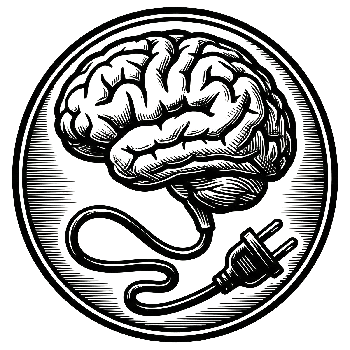
The visual description mentioned in your question – a brain with an electrical cord and plug as a spine – serves as a perfect metaphor for this phenomenon. Generation Z’s “spine” is no longer traditional ideology or national identity, but a digital connection. They have plugged into a global network (plug), and their collective consciousness (brain) charges from shared information and culture. When governments (as in Nepal) try to “pull the plug” (internet bans), the reaction is violent because it is perceived as cutting a vital connection.
6.4 Future Outlook
The “Straw Hat Spring” of 2024–2025 has shown that popular culture has become irreversibly politicized. Governments must now face a generation that does not respect traditional hierarchies and is ready to adopt radical symbols to support their demands. The coup in Madagascar and the fall of the Nepali government are warning signs that the demands of the “pirates” must be taken seriously.
Table 1: Country-Specific Summary of Protests and One Piece Symbolism
| Country | Protest Name/Type | Key Trigger | Specific One Piece Feature | Political Outcome |
|---|---|---|---|---|
| Indonesia | “Peringatan Darurat” | Dynasty laws, housing allowances, death of Affan Kurniawan | Flag on cars/mopeds, “Luffy” in smoke | Cancellation of bills, freezing of housing allowance |
| Nepal | Anti-corruption | Social media ban, “Nepo babies” | Flag in burning Singha Durbar | PM Oli resigned, Sushila Karki (1st female PM) to power |
| Philippines | “Trillion Peso March” | Disappearance of flood control funds, corruption | “Baha sa Luneta”, flags at EDSA Shrine | Civil service purges, investigations |
| Madagascar | “Gen Z Mada” | Power/water outages (Jirama), poverty | Skull modified with Satroka hat | President Rajoelina fled, military coup |
| Morocco | GenZ212 | Maternal mortality (Agadir) vs. Stadiums | Digital spread on Discord | 15bn investments in health/education |
| Bolivia | Election protests | Suspicions of election fraud, dollar shortage | Flags in front of election office, church appeal | Demand for election audit, instability continues |
| Bulgaria | Budget demonstration | Pension and social security contributions | Flags at Sofia demonstrations | Government resignation, cancellation of budget |