I am standing at the Pitäjänmäki border checkpoint. The former city boundary is now an international border. Concrete barriers and shiny steel fences separate Helsinki from Espoo. Behind me, hundreds of cars are in line – “foreign” commuters trying to get to work in the city-state.
Mayor Trump’s ”Helsinki Pass” system is ruthless: if you don’t have a university degree or an employment contract guaranteeing an annual income of at least 80,000 euros, crossing the border takes hours.
The Glitter of Gold on Mannerheimintie
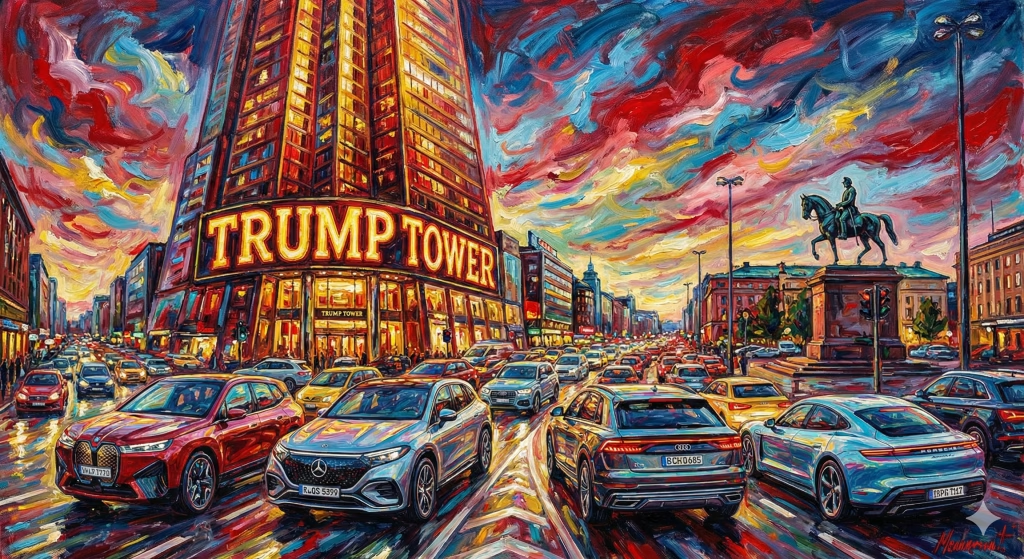
I enter the inner city, and Helsinki is no longer the same. Mannerheimintie has been dug up again. Bike lanes have been bulldozed and replaced by six lanes of shiny German SUVs. Construction sites are everywhere. In place of the former Postitalo stands a glass skyscraper, with gold letters shining at the top: TRUMP TOWER HELSINKI.
I meet Anja, 74, a former librarian, sitting on a bench in Esplanadi. Or rather, on the narrow strip that remains of Esplanadi. The park has been narrowed to make way for the entrance of the new underground ”Freedom Parking” garage.
Anja is holding an eviction notice. ”I lived in my two-room apartment in Kallio for fifty years,” Anja says, her voice trembling. ”Then the city sold the plot of the housing company to an investment firm from Florida. The rent tripled overnight. The Mayor said on television that ’if you can’t pay, you don’t deserve to live in the best city in the world’. But where will I go? To the Finnish side in Vantaa? I don’t know anyone there”.
Residents of “old Helsinki” like Anja are becoming invisible. Social benefits no longer exist; they were replaced by the ”Opportunity Grant,” which can only be applied for if one demonstrates ”entrepreneurial activity”.
The City of Winners
For everyone, the new order is not a tragedy. In the new rooftop bar at the South Harbour, the atmosphere is electric. I meet Markus, a 28-year-old crypto analyst. He moved to Helsinki from Frankfurt immediately after independence.
”This is incredible,” Markus says, gesturing toward the sea where massive cruise ships glide by without environmental restrictions. ”No income tax, no unnecessary regulation. If you want to build a pier directly on a protected islet, you just buy a license. That is freedom. Helsinki is now the Singapore of the Baltic Sea, but with better nightlife”.
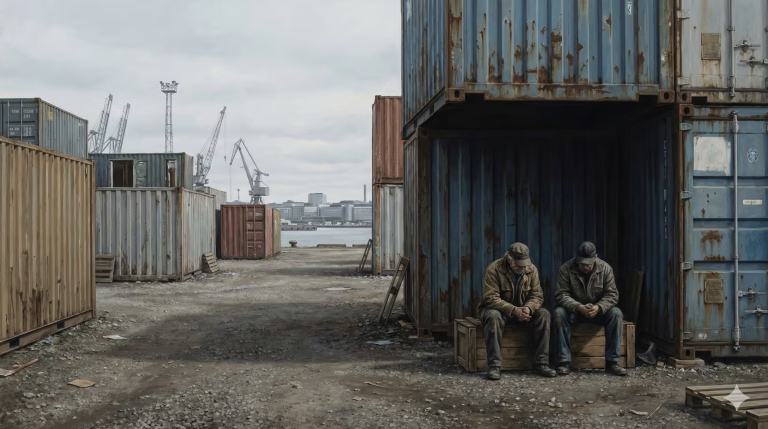
For Markus, the city is a playground. He doesn’t see – or doesn’t want to see – the hundreds of cleaners and kitchen assistants who are bussed across the border from Vantaa every morning because they cannot afford to live in the city they keep running.
The Dream of Malmi and the Eastern Reality
In the afternoon, I travel to Malmi. The airport has come back to life. The historical meadows have been paved over, and ”Air Helsinki” jets belonging to the small city-state take off from the runway in a continuous stream. The Mayor has turned Malmi into a tax-free luxury logistics hub.
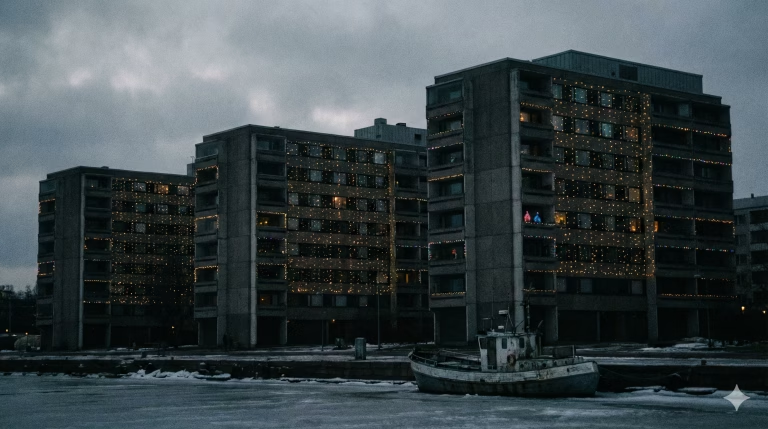
In East Helsinki, the picture changes. A kind of gray zone has formed around Itäkeskus. When city funding for schools and youth centers was cut as ”inefficient,” it was replaced by a private security business. Guards dressed in black outfits with assault rifles stand on street corners.
”We are on our own,” says Abdi, who runs a small grocery store. ”The city no longer looks after the streets or lighting here. We pay protection money to a private firm to keep the shop intact. The Mayor visited here once and said we need to ’deal’ our way out of poverty. But how do you deal when the city’s internal customs prevent the movement of goods?”
As Evening Falls
As the sun sets over the Helsinki horizon, the city glitters more beautifully than ever when viewed from the sea. The sea of lights is vast, and new advertising lights reflect restlessly in the water surging in the harbor basin. Looking closer, one sees the cracks.
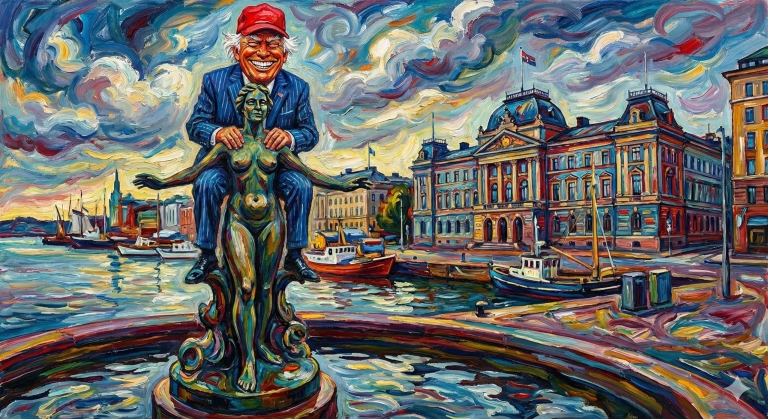
Helsinki is now a corporation, not a community. It is efficient, shiny, and rich, but it has lost its ability to feel pity. Mayor Trump’s ”Helsinki First” has been realized: the city is indeed first, but its residents have become either shareholders or mere expenses to be cut away.
As I return to the Finnish side, I look back. At the border, there is a sign illuminated with bright LEDs: ”Leaving Helsinki? Your loss. We’re winning.”
Anja is still on her bench. She is no longer crying. She looks with dim eyes at the sea she will soon no longer be able to afford to watch.
More on the subject: Helsinki First – What if Donald Trump Became the Ruler of the Capital?