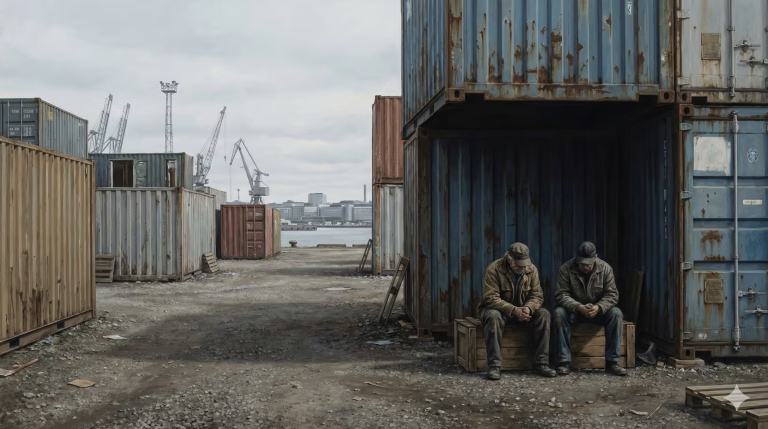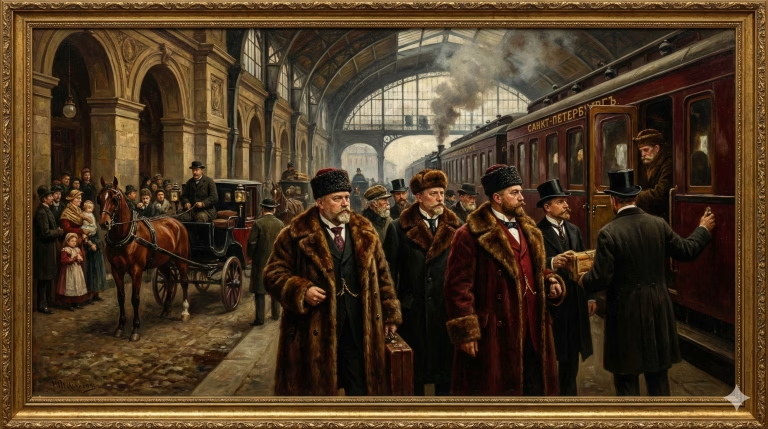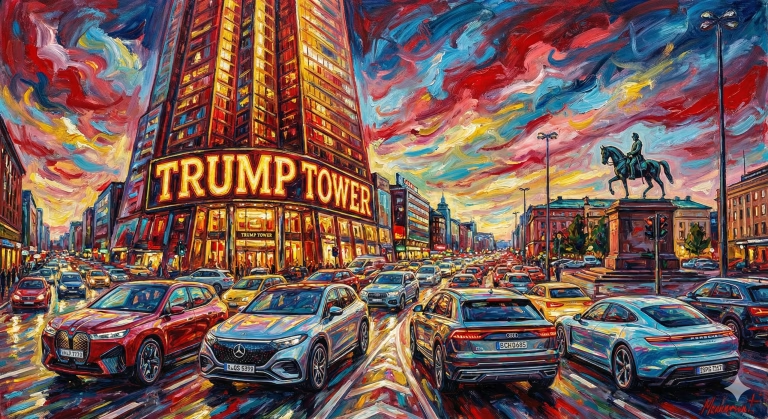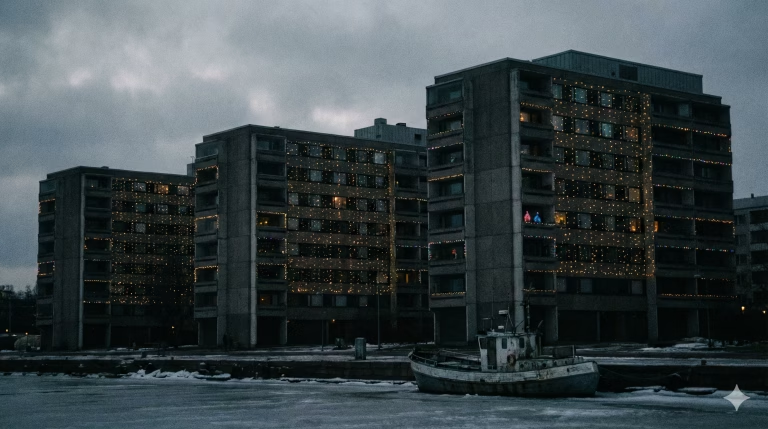
Scenarios are a tool used by futurists to outline various more or less possible futures based on available information. At their best, scenarios can help identify the strengths and weaknesses of the current system from a new perspective.
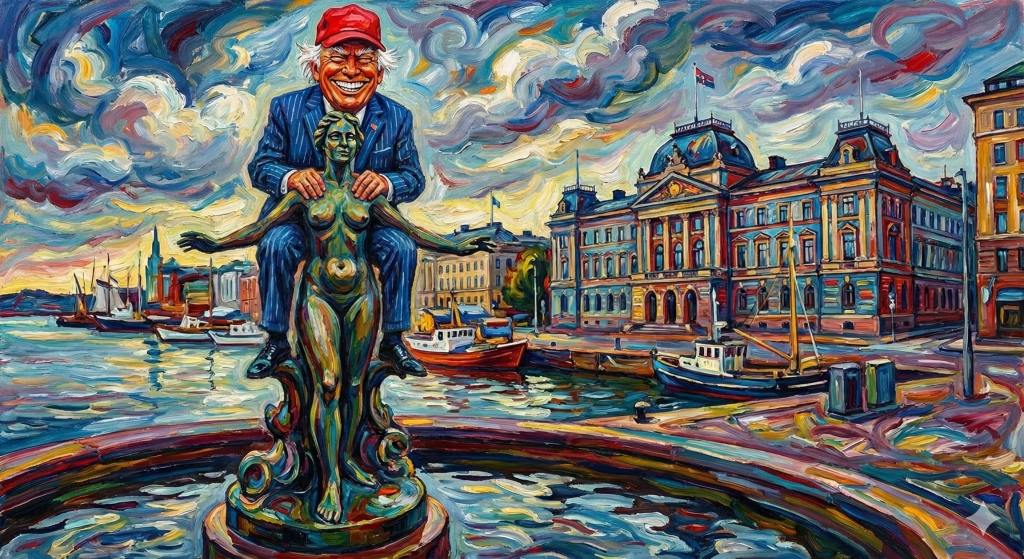
Helsinki.moi loves scenarios. So, let’s imagine a situation: Donald Trump is elected Mayor of Helsinki. He has a simple majority in the city council (43/85 seats), giving him the theoretical power to completely change the city’s direction. Traditional Nordic consensus politics is replaced by a “Helsinki First” doctrine, which relies on deregulation, favoring motoring, and the omnipotence of the markets.
How would this change the daily lives of residents? At what point would the mayor’s power collide with Finnish law? Let’s imagine two futures with different constraints.
Scenario A: Collision Course with Realities
In the first scenario, Trump operates within the framework of current Finnish legislation. Although the mayor has a strong position as the leader of the city board, he would quickly realize that he is not the city’s absolute ruler.
Administrative “Deep State” and Budgetary Power
Trump’s preferred style of governance would lead to an immediate conflict with the independent civil service in Helsinki. Since department heads are elected by the council, the mayor would attempt to bypass the bureaucracy with a massive staff of political assistants. He would use the council majority and his “right of call-up” to move decisions from committees to the city board, where he can dictate the pace.
The most critical weapon is the budget: the financial plan would include goals that prevent spending on areas like carbon neutrality targets or diversity work.
Daily Life: A Renaissance for Motoring and the Expensive Freedom of Housing
The change would quickly become visible in the daily lives of residents:
- Bike lanes would be removed, and city boulevard projects cancelled to smooth the flow of car traffic.
- Subsidies for HSL (Helsinki Regional Transport Authority) would be cut, raising ticket prices and hitting low-income residents and students hardest.
- Construction at Malmi Airport would be suspended, and the area declared a “Strategic Aviation Center.”
- City rental apartments (Heka) would be sold to private investors, leading to market-rate rents and the eviction of low-income people from the inner city.
- Health centers would be outsourced, and support for “woke organizations” like the Pride event would be terminated.
Limits of Authority
However, Mayor Trump would soon hit legal walls:
- Zoning changes or regulatory bypasses not based on law would be overturned in administrative courts following appeals from residents and the ELY Center.
- If the privatization of social and health services jeopardized citizens’ rights, supervisory authorities like Valvira and AVI would intervene with fines.
- Laws securing equality and basic income—and ultimately the Constitution—would prevent the most radical cuts.
The result would be a continuous legal war of attrition, paralyzing the city’s development for years.
Scenario B: Independent City-State – The Singapore of the North
If Helsinki were to break away from Finland as an independent city-state, all national restrictions would vanish. Trump would become a true sovereign, and Helsinki would become a radical neoliberal experiment.
Economic Superpower and Strict Borders
An independent Helsinki could drastically lower taxation, attracting international capital and sending GDP skyrocketing. The city would transform into a dynamic financial center, but the cost would be high:
- Checkpoints would be erected on the ring roads (“Build the Wall around Helsinki”). Entry to the city would only be possible for the wealthy or those with a job.
- Service industries would be handled by temporary guest workers with no right to social security.
Daily Life: An Elite-Centric Dystopia
Daily life in this scenario would be sharply divided:
- High-income earners would enjoy low taxes and top-tier private services in gated communities.
- The middle class and low-income earners would be forced to move away due to rising living costs and non-existent social security. The city would split into wealthy ghettos and a harsh competitive society.
Conclusion
A Helsinki led by Donald Trump would be a systemic shock testing the resilience of the Finnish constitutional state. While Helsinki remains part of Finland, Trump would cause chaos and delays, but national law would prevent a full revolution. As an independent city-state, Helsinki would become a wealthy but socially brutal metropolis where Nordic welfare would be but a distant memory.
More on the subject: Report from Behind the Wall: A Day in Mayor Trump’s Helsinki