Think of Christmas in Helsinki. The light chains of Aleksanterinkatu, the twinkling trees of the Esplanade, and the wooden stalls of the Tuomaan Markkinat Christmas market. That is the official, cotton-soft Christmas. But most of us don’t live in that neoclassical dream. The stage for our Christmas consists of the windy bridges of Pasila, the concrete decks of Merihaka, and the prefabricated buildings rising from the middle of the forests in the eastern suburbs.
When the surrounding landscape is hard, gray, and even bleak, Christmas isn’t found ready-made on the street. You have to make it yourself.
The Warm Embrace of the Bunker
As November turns into December, light is scarce. in a concrete suburb, darkness is not just a lack of light but a physical element. Wet raw concrete absorbs everything: it swallows streetlights and car headlights. But when the frost tightens and snow covers the ground, a miracle happens. The concrete turns into a silver canvas that softly reflects the lights of the sky and the city.
In this environment, the meaning of home is emphasized in a way that is difficult to understand in an idyllic wooden house block. When sleet lashes outside and the wind howls at the corners of the apartment building, a perfect refuge is born inside the concrete walls. Contrast is the essence of everything. The colder and harder the outer shell, the softer the wool sock on your foot and the mug of glögi in your hand feel. The window is an interface between two worlds: behind the glass is a merciless storm of elements, but inside is peace.
Merihaka: A Village in the Wind and Sky
Merihaka is the most extreme example of this contrast. It is like its own island, a concrete utopia by the sea. It is always windy on its famous deck, and when leaving for Christmas church, you have to fight against the forces of nature. But precisely this isolation creates a unique community spirit – “us Merihaka residents.”
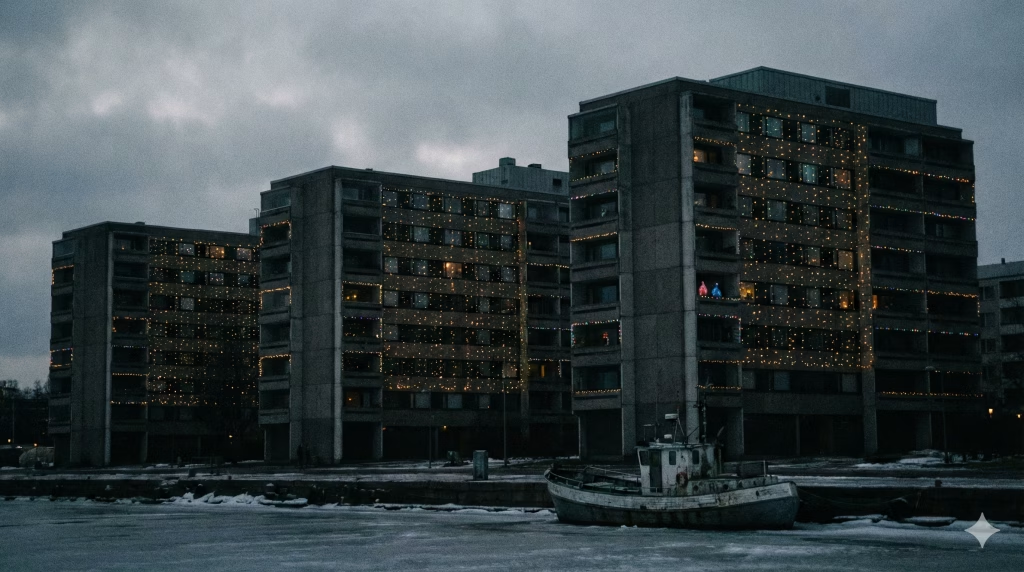
At Christmas, Merihaka is like a sci-fi movie set where humanity glimpses as vanishingly small points of light. Because the houses are massive, the Christmas lights lit by residents on their balconies form a twinkling matrix in the darkness, a random star map that can be seen far out to sea.
The area also has its own traditions. On Epiphany, residents gather at the shore to sink Christmas trees into the sea as spawning grounds for fish. A rugged but beautiful ritual: recycling and community at the interface of concrete and ice. Merihaka teaches that a community can flourish even in barren soil, as long as the roots are deep.
The Lights and Shadows of Pasila
Where Merihaka is isolated, East Pasila is a thoroughfare, an urban labyrinth. Its maze-like walkways and tunnels can feel like a dystopia, but at Christmas, they too get a new look. The area’s rough character and colorful street art create a very unique, “cyberpunk” aesthetic for Christmas.
The abundant, commercial glow of the Tripla shopping center dyes the sky purple, but many residents prefer to escape that plastic glitter to the side of old Pasila. There, Christmas is quiet and genuine. Standing on Opastinsilta bridge, you can see the lights of the railyard and feel you are in the pulse of the big city, but still in your own peace.
In Pasila, Christmas lights are not just decorations; they create safety. A series of lights shining at the end of a dark alley is like a lighthouse that says: people live here, people care here.
The Peace of the Forest City
Moving to the eastern suburbs, to Kontula or Myllypuro, concrete meets the forest. Here, the brutalist Christmas atmosphere is more organic. Prefabricated buildings stand among the trees like silent giants.
The magic of Christmas is found in silence. Snow muffles sounds, and walking towards home along a forest road, the only sound is the crunch of your own steps in the snow. The landscape is simplified: there is only the white drift, the dark trunks of trees, and the gray surface of the concrete. To this simple palette, every candlestick shining from a window brings a touch of warmth.
The shopping center (“ostari”) is the heart of the suburb, the place where lights and sounds concentrate. Although the shopping center is architecturally rugged, at Christmas it is a village square where neighbors meet. It reminds us that Christmas is not born of the setting, but of the people.
The Core of Christmas Spirit is in Contrast
The resident of a concrete suburb creates Christmas in their heart as a counterforce to their environment. It is an active act: I turn on the light because it is dark outside. I invite friends over because it is cold outside.
Perhaps the true northern Christmas lives right here, where the darkness is deepest. When a massive concrete tower disappears into a blizzard and a light burns in only one window, there is something sublime and comforting about it. It is a reminder that in the midst of even the bleakest landscape, a human builds a nest for themselves, and makes it Christmas.